LOCATION
A 160 (STU)
August 31, 2026 – December 19, 2026
Section 1
Mondays / Wednesdays 1:00PM - 3:50PM
INSTRUCTOR
J. Blake Johnson
email: jbjohns1@svsu.edu
Office: Arbury Fine Arts 117 –
989 964-2255
OFFICE HOURS
Tuesdays & Thursdays, 10:00am – 12:00pm (Noon)
or one hour as arranged.
ATTENDANCE & TARDINESS
Consistent attendance is essential. Absence due to health reasons requires a doctor's note to avoid grade implications. Being over 30 minutes late is considered an absence.
Class will convene at the scheduled time and location. Attendance guidelines are as follows:
• Three absences = grade reduced by one letter
• Four absences = grade reduced by two letters
• Five absences = course failure
Being late three times counts as one absence. Arriving more than 10 minutes late or leaving 15 minutes early will result in an unexcused absence.
COURSE DESCRIPTION
This web design course will provide a basic understanding of the methods and techniques of developing simple to moderately complex web sites.
Using the current standard web language of HTML5 & CSS3, students will be instructed on creating and maintaining websites. Students will learn to plan, build, style, and publish their own sites — writing the code by hand before adding tools on top of it.
Just because the course material is online, treating it as an online class is not an option.
COURSE OBJECTIVES
Help the students learn:
• to establish and maintain web sites
• understand HTML code
• to develop navigation plans and site maps
• to place images and create links
• CSS for text and layout styling
REQUIRED TEXT
W3 Schools Online
by Refsnes Data

Other articles and book passages may also be provided.
OPTIONAL TEXT
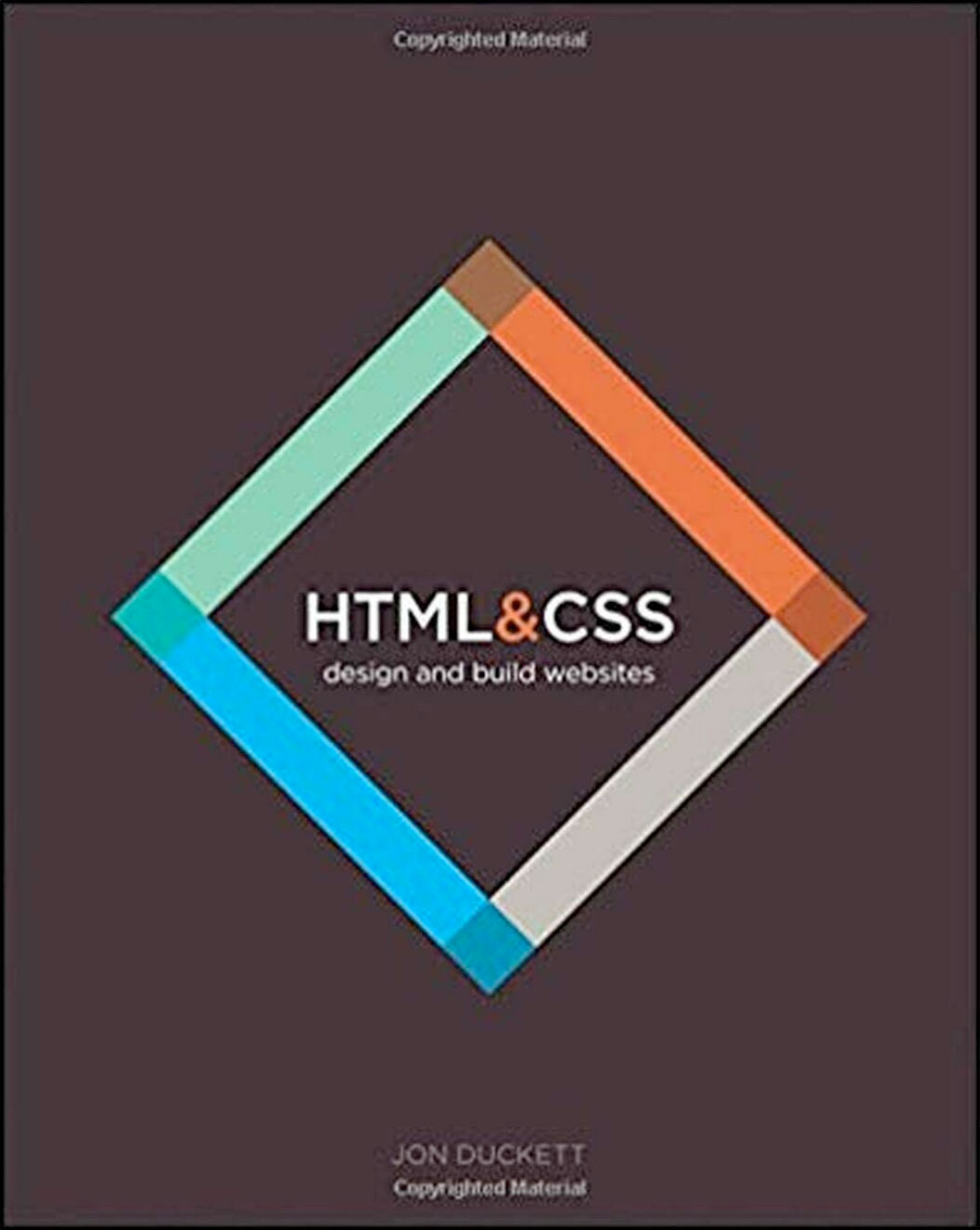
HTML and CSS: Design and Build Websites (1st Edition)
by Jon Duckett
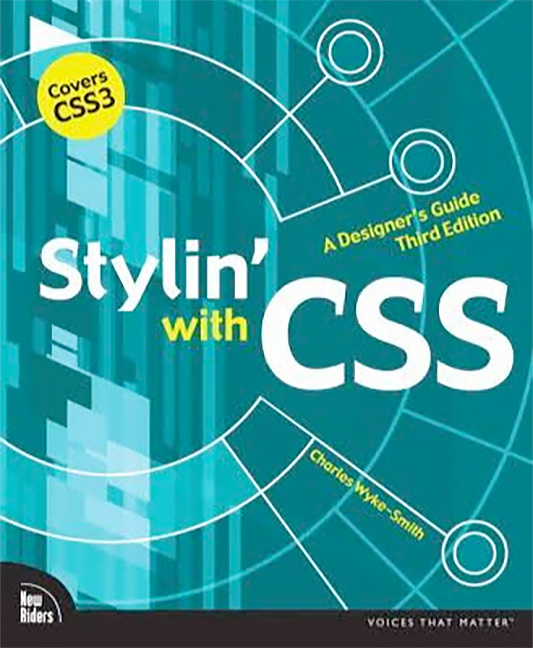
Stylin’ with CSS: A Designer’s Guide (3rd Edition)
by Charles Wyke-Smith
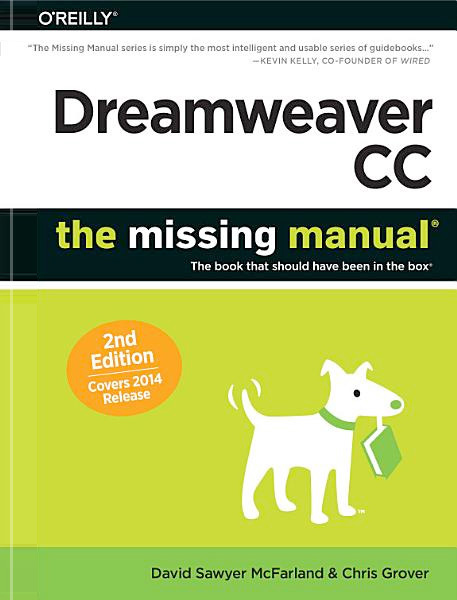
Dreamweaver CC: The Missing Manual (2nd Edition)
by David Sawyer McFarland and Chris Grover
PROJECT SCHEDULE
There will be one Work Site — your own notes from each week of learning, rewritten as rough HTML/CSS pages — made up of six step pages, six reading summaries, four challenges, and six quizzes during the semester. There will also be one Secondary Site, built with a minimum of five pages.
The schedule is subject to revision at anytime at the discretion of the instructor. The final number of projects may change based on the speed/skill of the class.
WORK SITE - Steps
Upload to your site before midnight on the following Fridays…
25 Points each All steps will be turned in as a web page
Each step is your own notes from that week's lecture, rewritten as a rough HTML/CSS page — and built with the techniques it describes. By the end, your Work Site is a reference manual you wrote yourself: months after this class, when you forget a detail, you can look it up on your own site.
Step 1 - Sept 11 - The Site Root Folder
Step 2 - Sept 18 - HTML Anatomy — the Sandwich & Tags
Step 3 - Sept 25 - Text Tags & Semantic Structure
Step 4 - Oct 2 - CSS Basics
Step 5 - Oct 9 - Compound Rules
Step 6 - Oct 16 - Layout: Flex & Grid
Step 7 - Oct 23 - Responsive Design & Interactivity (Bonus — Extra Credit)
READING SUMMARIES
Complete outside of class
Upload to your site before midnight on the following Fridays…
25 Points each Reading summaries will be turned in as a web page
Summary 1 - Sept 11 - The Site Root Folder
Summary 2 - Sept 18 - HTML Anatomy
Summary 3 - Sept 25 - Text Tags & Semantic Structure
Summary 4 - Oct 2 - CSS Basics
Summary 5 - Oct 9 - Compound Rules
Summary 6 - Oct 16 - Layout: Flex & Grid
CHALLENGES
Done in-class — first individually, and then as a group
25 Points each Challenges will be turned in as a web page
Challenges begin in Week 3, once the term calendar settles after Labor Day.
Challenge 1 - Sept 23
Challenge 2 - Sept 30
Challenge 3 - Oct 7
Challenge 4 - Oct 14
QUIZZES
Complete in-class via Canvas on the Wednesdays below
25 Points each Multiple choice & true/false
Quizzes are on Canvas and must be taken in class via Firefox
Quiz 1 - Sept 9 - The Site Root Folder
Quiz 2 - Sept 16 - HTML Anatomy
Quiz 3 - Sept 23 - Text Tags & Semantic Structure
Quiz 4 - Sept 30 - CSS Basics
Quiz 5 - Oct 7 - Compound Rules
Quiz 6 - Oct 14 - Layout: Flex & Grid
SECOND SITE
Copper Summit Ski Resort Site
700 Points Due uploaded to your site by the Friday of Finals Week
Minimum of five pages. Must use all text provided.
Copper Summit Ski Resort Site - Dec 18 - Final - Pass/Fail
KEY PROJECT DEVELOPMENT
All of the finished work done in this class is to be completed by computer. Typically each project has five parts:
1) the written concept
2) multiple wireframe sketches
3) the site map
4) the online site web page(s)
5) the presentation of the finished work when required
GRADES AND LEARNING
Work will be assessed based on the quality of the concept, the use of the design principles in support of the concept, and the level of craft in execution. To further explain grade/assessment criteria:
A - sound application of design principles in support of strong concept, excellent craft.
B - design principles mostly support concept, good craft.
C - design principles present but do not support concept, fair craft.
D - basic understanding of design not demonstrated, weak concept, poor craft.
F - no evidence of understanding design, weak or no cohesive idea.
GRADE SCALE
Key project grades are based on an 100 point scale.
Superior
A 93 and above
A- 90 - 92
Very Good
B+ 87 - 89
B 83 - 86
B- 80 - 82
Average
C+ 77 - 79
C 70 - 76
Below Average
D 60 - 69
Failing
F 59 and below
ASSIGNMENT POINTS
The schedule is subject to revision at anytime at the discretion of the instructor. The final number of projects may change based on the speed/skill of the class.
A breakdown of points possible:
Step 1 – 6 (25 each) 150
Step 7 (Bonus — extra credit) +25
Summary 1 – 6 (25 each) 150
Challenge 1 – 4 (25 each) 100
Quiz 1 – 6 (25 each) 150
Copper Summit Ski Resort Site 700
———————————————————————————
Total 1250
RECORD OF STUDENT WORK
For the purpose of recruitment and promotion, your instructor may be collecting images of your work. Your work may be published in many forms such as on a website or other computer generated advertising.
In addition, the Department may be taking photographs of students and instructors in classroom for the same purpose. Please contact the instructor or the chair of the Art Department, J. Blake Johnson, jbjohns1@svsu.edu, if you do not wish your work or images of yourself to be reproduced or published. We will honor your request.
NON-DISCRIMINATION
SVSU does not discriminate based on race, religion, color, gender, sexual orientation, national origin, age, physical impairment, disability, or veteran status in the provision of education, employment, and other services.
COURSE CONTRACT
Read the entire syllabus carefully. Staying enrolled in this course after reading it will constitute that you understand and agree to follow the requirements and rules of the class as described.
It also will constitute that you understand and agree to receive the point deductions, and to face some academic consequences if you do not follow them accordingly.
STUDENT RESPONSIBILITIES
Exercise creativity and experiment within the parameters of each assignment. Be open and willing to learn new software tools and design styles.
Prepare for class. Come to class ready to learn. Stay focused and attentive in the classroom. Avoid distractions such as electronics or talking with classmates. Students who violate this rule will have two points deducted from their final grade. In addition, do not leave the classroom during class time, except in case of an absolute emergency.
PRESENTATION AND CRITIQUE PARTICIPATION
Students will present their conceptual ideas to the class during the final project critique. All students are expected to share their ideas with the class, explain what is successful with the piece and learn how the design can be improved. Use a professional and respectful tone while discussing the work of your peers. Critiques should never feel like a personal attack.
Make an effort to be as open to feedback as possible. Feedback should resonate with you as you develop in your design practice. Try to avoid deflecting comments.
COPYRIGHT POLICY
All images used for your projects must be original. This includes, but not limited to, photography, logos, graphic design works, painting, drawings, 3D works, and such. Your work cannot be directly copied from books or ‘taken’ from the web or any other resources.
The Saginaw Valley State University Policy Regarding Copyright briefly outlines those parts of the U.S. Copyright Law which apply to educational institutions. Please see below link for SVSU policy…
LATE WORK
Late work will be accepted, but a 10 point grade deduction will always apply. The instructor’s permission is needed to turn work in late. However, no late work will be accepted two days beyond the project’s due date.
ACADEMIC HONESTY
Cheating will not be tolerated and all cases of cheating will be reported to the Office of Student Conduct Programs. Using someone else’s design or written work as your own, in any form, is recognized as plagiarism. Note: the use of AI tools during the first six weeks of this course is considered a form of plagiarism. See the Artificial Intelligence (AI) section.
We will respond to academic dishonesty in one of three ways depending on the depth and nature of the offense:
•
You may be asked to repeat the project using your own ideas and work.
•
You may be assigned a failing grade for the course in accordance with University regulations.
•
A file may be established with the Dean of Students to record the incident, in case of repeated offenses.
For more information see:
ELECTRONIC DEVICES
It is the policy of the Department of Art that the use of electronic devices such as cell phones, laptops, tablets, etc., for personal reasons unrelated to the course is absolutely prohibited and will result in some form of demerit. Violators will be reported to the Department Chair.
A student found using an electronic device for working on a different class project, texting, viewing facebook, streaming video, etc., during class work hours, will suffer a two point penalty on their final grade for every incident. The computers are to be used as classroom tools, not as entertainment.
Turn off/silence your cell phones and leave them in your backpack/purse. Students who violate this rule will have two points deducted from their final grade.
Note: the recording of lectures is only permitted with a letter from the Office of Disability Services. Students must get permission from the instructor before using a laptop to take notes in class.
COMPUTER PROBLEMS
Do not use technical problems as an excuse to hand in your work late. Computers and other electronics do fail. Do not use the loss/failure of drives as an excuse to hand in your work late. Have a backup plan if the files are lost or fail. Always make a back-up of all work done everyday.
Students are able to use their own laptops as desired. However this may limit the instructor’s ability to solve file issues — as students may be using different operating systems, and different versions of the class software. If you would like more computer support please use the computers supplied in the Mac Lab.
SUPPORT SERVICES
Please be advised that success in this course heavily relies on the student’s ability to visually discern distinctions within slide and video presentations. Reasonable accommodations are available for students who have a documented disability. Students with disabilities who seek accommodations must make their request by contacting the Office of Accessibility Resources & Accommodations.
Please notify the instructor during the first week of class of any accommodation(s) needed for the course. All accommodations must be approved in writing through Accessibility Resources & Accommodations (formally known as Disability Support Services). For more information see: https://www.svsu.edu/access/ or send an email to: access@svsu.edu
All arrangements with Accessibility Resources & Accommodations should be made before the end of the 6th week of the term. No contracts are retroactive. Until an accommodations contract is in place, the syllabus standards for grades and attendance will apply.
ARTIFICIAL INTELLIGENCE (AI)
For the first six weeks of this course (August 31 – October 16), the use of AI tools is prohibited. All HTML and CSS must be written by hand so you build a working knowledge of the language before adding tools on top of it. A weekly quiz will cover the fundamentals taught during these AI-free weeks.
Beginning the week of October 19, AI may be used as a directed tool to support research, problem-solving, and creative exploration. We will always direct AI (with clear prompts and roughs) rather than let it produce material randomly.
Language is key to collaborating with AI systems. By broadening our vocabulary across academic and casual concepts, we can better harness AI's potential. As we navigate the evolving world of AI, we'll collaboratively learn to merge its capabilities with human skills, fostering a cyclical workflow between students and AI for improved understanding and results.
COMMUNICATION POLICY
Email is the preferred method of communication for this class. Students should use their SVSU email accounts when contacting the instructor.
FINAL EXAM / FINAL ASSESSMENT
The Copper Summit Ski Resort site serves as the final exam for this course. For this reason, the final project deadline has been extended into Finals Week (due Friday, December 18, 11:59 PM).
UNIVERSITY DATES / DEADLINES (FALL 2026)
• Labor Day Recess (No Classes): September 7 – 8
• Last Day to Withdraw with 100% refund & Deleted Course: September 4
• Last Day to Withdraw with 100% refund and “W” grade: September 18
• Last Day to Withdraw with 50% refund and “W” grade: October 2
• Last Day to Withdraw with “W” grade: November 13
• Thanksgiving Recess (No Classes): November 25 – 27
• Classes End: December 12
• Final Exams: December 14 – 19
• Incomplete Expiration Date (Due to Registrar): February 8, 2027
EMERGENCY PROCEDURES
Emergency closures and delays are determined by the University.
We will follow University recommendations. SVSU will notify you via email and—if you’ve enrolled in alerts—by text message and phone call.
REQUIRED MATERIALS
Supplies for this class are estimated at $35 to $65
- textbook
- two flash drives (16 GB or larger)
- spiral bound notebook or 3 ring binder